

Introduction
Nuclear power plants (NPPs) are crucial for ensuring energy security, reducing greenhouse gas emissions, and supporting the transition to sustainable energy systems. Although land-based NPPs have been the standard for decades, offshore floating nuclear power plants (OFNPs) have emerged as an alternative with promising safety and security advantages. OFNPs, initially proposed by a research team at the Massachusetts Institute of Technology (Buongiorno et al., 2016) and later explored by Japan’s Council on Competitiveness-Nippon (COCN, 2021, 2022, 2023), offer unique benefits, including reduced exposure to seismic and tsunami risks, minimised radioactive material dispersion, enhanced cooling capacity, and the potential to improve military deterrence through wide-area surveillance operations. In addition, as they are 30 km offshore, there are no residential areas within the evacuation planning zone and the height of tsunamis is lower offshore. Furthermore, continuous core cooling from the surrounding seawater is possible.
Despite technological advancements, nuclear security remains a critical issue, particularly in the context of evolving geopolitical threats. The 9/11 terrorist attacks1 in 2001 exposed vulnerabilities in critical infrastructure, prompting the International Atomic Energy Agency (IAEA, 2011) to strengthen international nuclear security guidelines. More recently, Russia’s invasion of Ukraine in 2022 introduced a new category of threats—state-led military attacks2 targeting NPPs—that challenge the traditional security frameworks primarily designed for counterterrorism (IAEA, 2022; World Nuclear Association [WNA], 2025).
Japan’s nuclear security framework follows a multi-layered approach, described as follows: Plant operators implement preventive measures against design basis threats, including external threats, such as terrorism. However, responses to attacks must involve agencies such as the police and Japan Coast Guard (JCG) (National Police Agency, 2022), but if an attack surpasses their capacity, the Self-Defence Forces (SDF) assume responsibility.
Nevertheless, Japan’s current regulatory framework remains largely reactive and is based on counterterrorism principles, rather than military defence, raising concerns about its effectiveness in addressing state-led military threats, particularly those arising in grey-zone scenarios, referring to a wide range of situations that are neither clear peacetime circumstances nor full-scale emergencies (Ministry of Defense, 2023). Specifically, it describes circumstances in which a military attack that does not constitute war is likely to occur. Although such situations do not activate Japan’s right of self-defence or use of force under international law, they nonetheless exceed the capabilities of ordinary law enforcement agencies, necessitating police-like operations by the SDF.
Research on military attacks targeting NPPs remains limited. Most existing studies concentrate on the consequences of radiation exposure following an attack, rather than analysing the scenarios that could lead to such incidents. For instance, the Japan Institute of International Affairs (1984) examined radiation exposure under specific accident conditions but did not investigate potential military attack scenarios. The attack on Ukraine’s Zaporizhzhia NPP has raised concerns that adversaries could deliberately target NPPs during armed conflicts. Additionally, spent nuclear fuel pools are more vulnerable to external attacks than reactor cores, which are generally more robust (Kobayashi, 2022). While previous research primarily focused on the physical consequences of such attacks, recent peer-reviewed studies have explored broader dimensions. Castelli and Samuel (2023) examine how attacks on nuclear facilities can be politically and morally justified. Baron and Herzog (2020) highlight how public attitudes towards nuclear energy are shaped by symbolic associations with nuclear weapons. These perspectives underscore the importance of considering not only the physical but also the strategic and societal implications of NPP attacks.
In contrast, military attacks on non-nuclear targets and Japan’s crisis response in grey-zone scenarios have been examined more extensively. These studies have yielded several key observations. First, researchers recognise a risk of escalation: deploying the SDF in response to an attack can provoke the situation into a full-scale military conflict or provide adversaries with a pretext for further aggression (Nakasone Peace Institute, 2018). Second, they note parliamentary challenges, as decision-making in the Diet (Japan’s National Legislature) may be hindered by concerns over retaliation if Japan is seen as supporting allied nations involved in conflict (Mori, 2017). Third, intelligence-related issues arise in such contexts; gathering sufficient information for cabinet decisions and parliamentary approval can be time-consuming and logistically complex (Sasakawa Peace Foundation, 2020).
While some studies have assessed accidents at NPPs, few have examined the potential for deliberate military attacks (Ramberg, 1980; US Nuclear Regulatory Commission, 1975). Furthermore, many have highlighted the need to improve Japan’s response to grey-zone situations, particularly by enhancing deterrence and crisis response strategies.
This study employs scenario planning to investigate potential grey-zone military threats to NPPs in Japan, a category of conflicts that remains below the threshold of open war but exceeds the capabilities of traditional law enforcement. By analysing high-impact, uncertain future scenarios, this study aims to answer the following research questions (RQs):
RQ 1: What types of grey-zone military threats to NPPs are most likely to involve high uncertainty and significant impact?
RQ 2: What countermeasures are commonly applicable across different scenarios, and what are the implementation challenges for the Japanese government and plant operators?
RQ 3: What are the potential advantages and disadvantages of replacing land-based NPPs with OFNPs?
Methods (scenario planning steps 1–5)
Figure 1 outlines the procedures, tools, and outputs for each step of the scenario planning process (Arai, 2021; Fukuyama, 2008; van der Heijden, 2005).
Figure 1.
Scenario planning process showing key steps, tools, and outputs based on established methodologies.
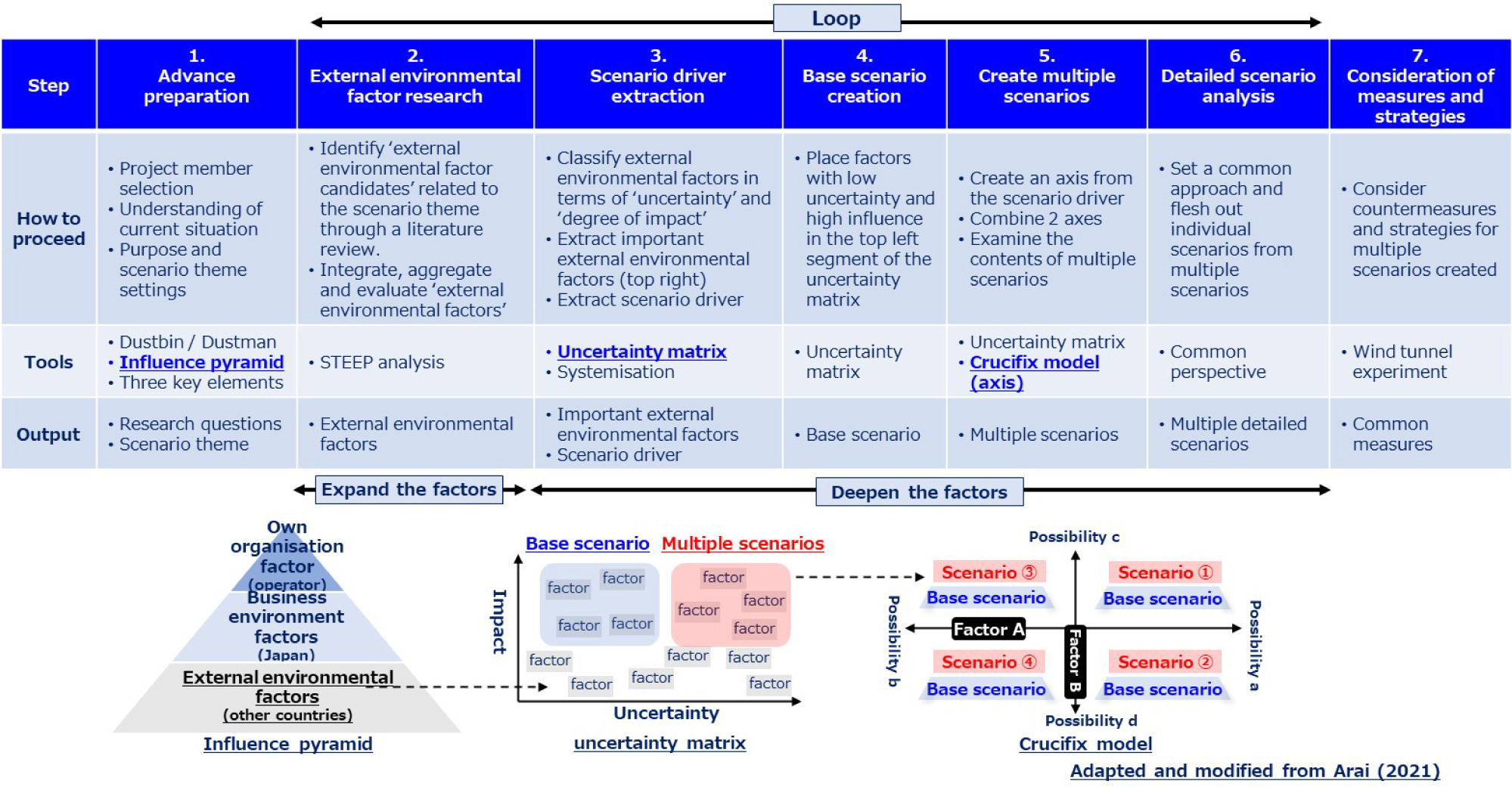
Preparation
The project team consisted of seven members selected based on their areas of expertise. They included one expert in economic security, two specialists in nuclear technology, one expert in nuclear security, two members affiliated with the SDF, and one specialist in management of technology.
To establish a baseline understanding of the current situation, approximately 100 extant studies were collected and referred to as a “dustbin” for initial analysis. From this collection, seven key issues were identified. These included the following: the risk of escalation, which involves the likelihood that police actions by the SDF would provoke tension or offer hostile nations a pretext for military escalation; parliamentary challenges, related to the fact that fear of retaliation may influence Diet deliberations regarding support for allied countries; evidence collection difficulties, as the process of obtaining sufficient evidence for cabinet decisions and Diet approval is often time-consuming and complex; international constraints, given the difficulty of exercising collective self-defence rights against major powers; the issue of nuclear deterrence, which may become more effective in wartime scenarios (National Academies of Sciences, Engineering, and Medicine, 2022); the vulnerability of NPPs, especially spent fuel pools, which may be targeted during conflicts; and finally, the lack of security clearance protocols, highlighting Japan’s insufficient procedures for handling sensitive nuclear technology.
In line with the “influence pyramid” approach commonly used in scenario planning, three key factors were identified as central to the scenario design: the organisational factor (the plant operators), the business environment factor (the Japanese government), and the external environment factor (other countries). Furthermore, this study incorporates three critical dimensions—time axis, geographic axis, and scope of consideration—into the framework of environmental change factors. This integrated approach enables a more comprehensive analysis of how external forces may influence Japan and its nuclear power infrastructure by 2035.
To deepen this analysis, research was conducted on external environmental factors relevant to the scenario theme. First, “external environmental factor candidates” were identified through a literature review. These candidates were then aggregated, integrated, and evaluated to determine the most significant ones. In this study, “uncertainty” refers to the degree of divergence in potential future developments. Specifically, with reference to 2035 (11 years from now), uncertainty is considered low when a single situation can be reasonably anticipated and high when multiple divergent outcomes are plausible. “Impact” refers to the probability of military action against NPPs occurring within the next 11 years. Based on these definitions, the final set of selected factors is presented in Table 1.
Table 1.
Evaluation of external environmental factors for scenario development.
Scenario driver extraction
This step involved classifying the external environmental factors based on their uncertainty and degree of impact (Figure 2).
Figure 2.
Uncertainty-impact matrix used to prioritise external environmental factors for scenario construction.

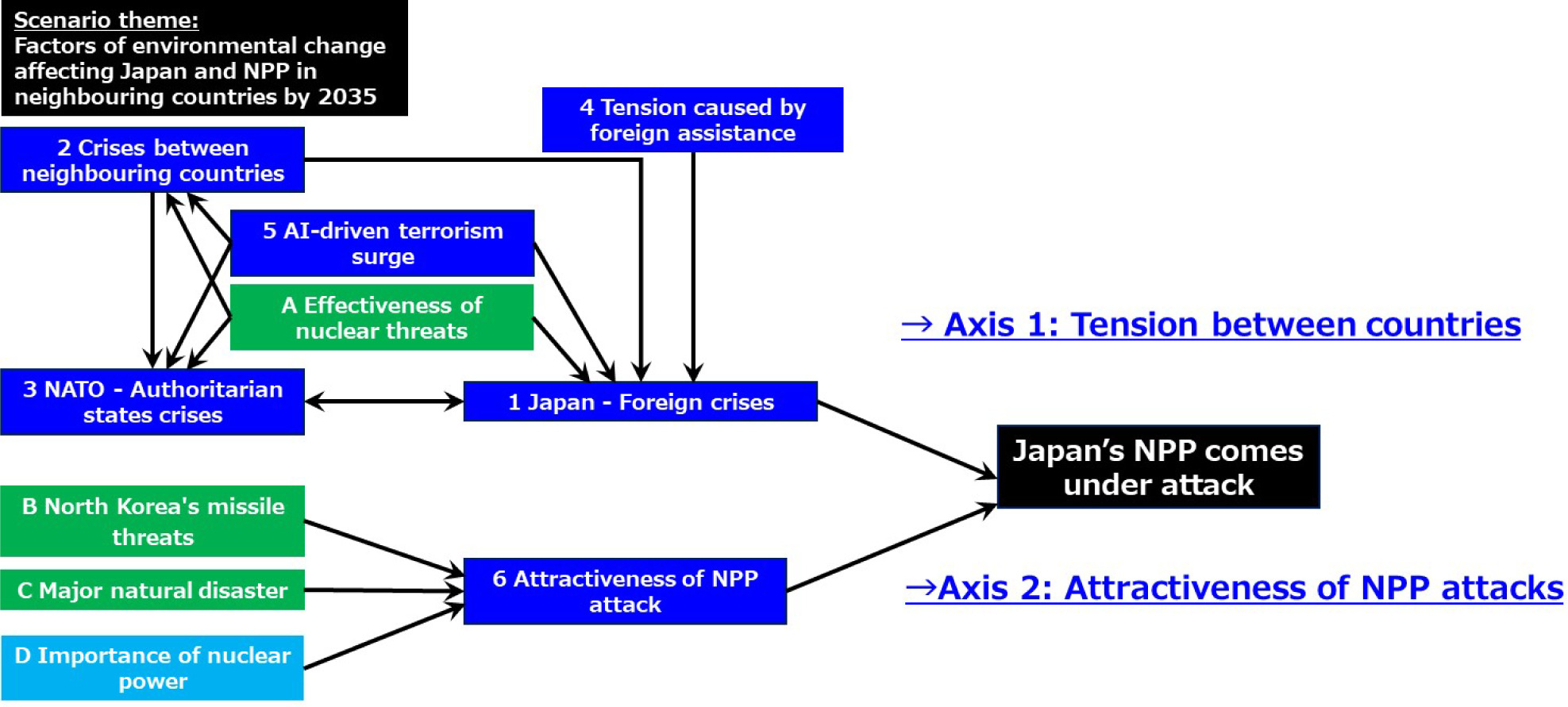
Amongst the external environmental factors, we identified those with a high impact and high-to-medium uncertainty as critical. As presented in Table 1 and Figure 2, these include the possibility of armed conflict between Japan and other countries, the risk of conflict among neighbouring countries, and potential crises involving North Atlantic Treaty Organization (NATO) and authoritarian states (Harding, 2022), heightened tensions resulting from foreign assistance, the proliferation of terrorism driven by the implementation of artificial intelligence (AI), and the growing recognition of the strategic attractiveness of NPP attacks in the context of asymmetric and great-power conflicts (Jenkins, 2007; Kroenig, 2022).
Building on this classification, the analysis of external environmental factors was systematised to identify the most significant amongst them. They were then aggregated to determine the two primary scenario drivers, which are tension between countries and the attractiveness of NPP attacks, as shown in Figure 3.
Base scenario creation
This step involved organising external environmental factors with high impact and low uncertainty into a base scenario, as illustrated by the uncertainty matrix. These factors served as the foundation for developing the worldviews and incidents relevant to the research questions (Table 1 and Figure 2).
The base scenario consists of two components: a worldview and specific incidents. From a worldview perspective, we assume that the perceived effectiveness of nuclear intimidation will increase, particularly in grey-zone conflicts, based on external environmental factor A, as suggested in recent strategic studies (Kroenig, 2023). In addition, North Korea’s missiles are expected to be put into practical use, as indicated by external environmental factor B.
Regarding incidents, the scenario includes an earthquake with a magnitude of than 6.0 occurring near an NPP in Japan, as derived from external environmental factor C. Furthermore, it envisions a case in which four unidentified drones carrying plastic bombs or moulded explosives attack an NPP in Japan.
Multiple scenario creation
To create multiple scenarios, two axes were constructed based on the identified scenario drivers. The first axis represents tension between countries, ranging from a state of immutability to increasing geopolitical tension. The second axis reflects the attractiveness of NPP attacks, also going from an unchanging level of threat to a heightened risk. The two axes were then combined to create a four-quadrant scenario framework that aligns the worldviews with the scenario themes. This framework was visualised using the Crucifix model.3 Subsequently, the contents of the four scenarios were examined against the research questions to finalise the most relevant scenarios for further analysis (Figure 4).
Figure 4.
The four-scenario framework using the Crucifix model based on geopolitical tension and NPP threat attractiveness.
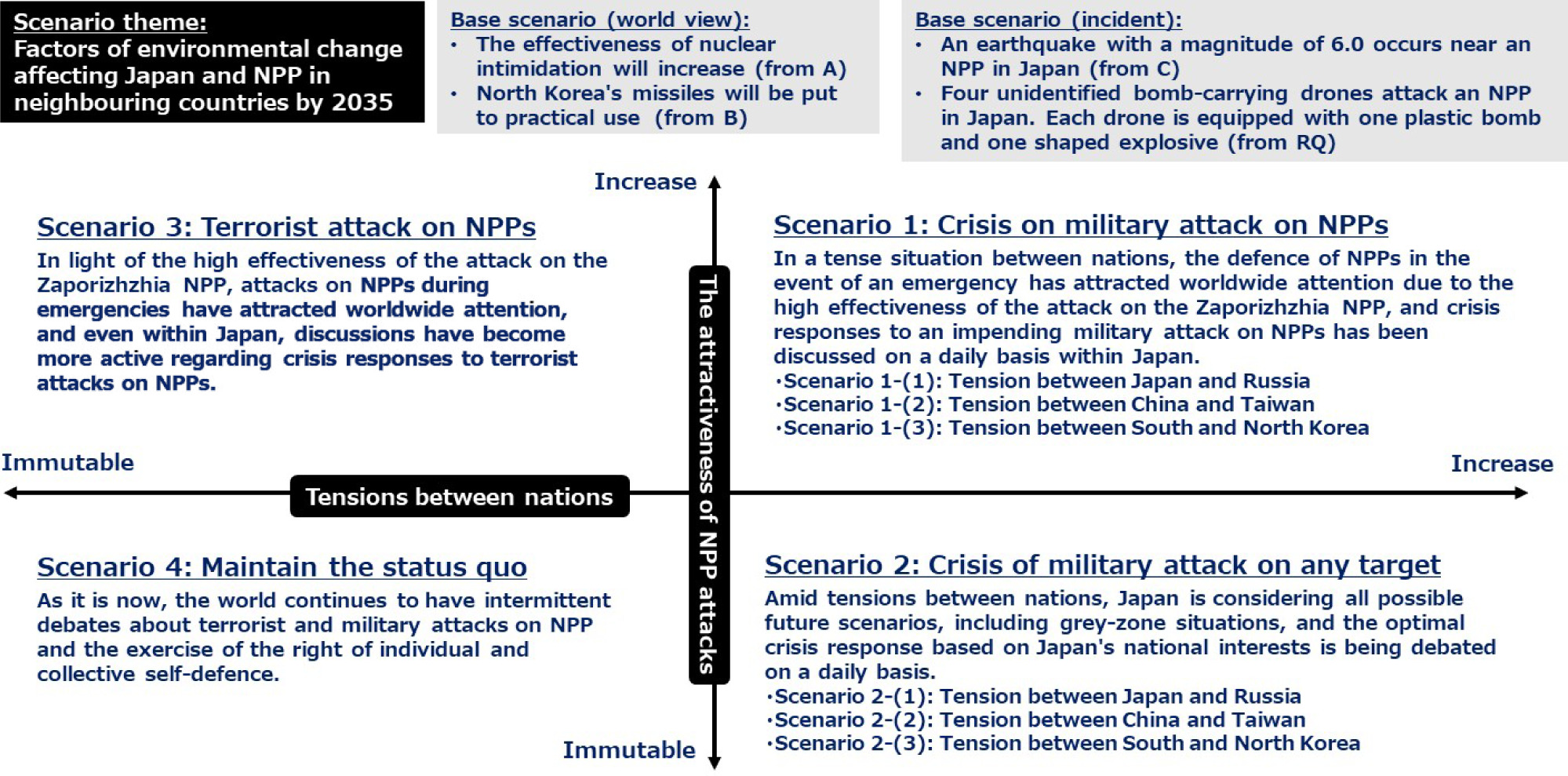
In addition, the framework’s evaluation of NPP attack attractiveness provides a conceptual basis for examining the potential advantages of OFNPs in addressing key vulnerabilities.
Scenario 1: Crisis of military attack on NPPs
In tense situations between nations, defending NPPs in emergencies has attracted worldwide attention, particularly following the highly effective attack on the Zaporizhzhia NPP. In Japan, crisis response to an impending military attack on NPPs has been a subject of regular discussion. We explored this scenario through two specific patterns. The first involves rising tension between Japan and Russia. The second considers growing tension in the region surrounding China and Taiwan, as discussed by Kroenig (2023). We also developed and examined a scenario involving heightened tensions between South Korea and North Korea; however, as its results were similar to those of the China and Taiwan scenario, we omitted it from this paper.
Scenario 2: Crisis of military attack on any target
Where tensions between nations are high, Japan considers every possible scenario, including grey-zone situations. Policymakers and stakeholders are engaged in ongoing discussions to determine the optimal crisis response that aligns with Japan’s national interests. In this context, we examined two patterns of strategic scenarios. The first involves tension between Japan and Russia. The second focuses on a situation involving heightened tension between China and Taiwan.
While both scenarios assume a high level of geopolitical tension, they differ in the perceived strategic attractiveness of military attacks on NPPs. In Scenario 1, such attacks are considered the most likely and impactful option for adversaries. In contrast, Scenario 2 assumes that NPPs are one of several potential targets, with relatively lower strategic priority. This distinction clarifies the different assumptions about threat prioritisation under similar geopolitical conditions.
Scenario 3: Terrorist attack on NPPs
The effectiveness of the Zaporizhzhia NPP attack, which occurred during an ongoing armed conflict between states, has drawn global attention to the vulnerability of NPPs under conditions of military escalation. In Japan, crisis response measures to address the possibility of a terrorist attack on an NPP are being discussed increasingly.
Results and discussion (scenario planning steps 6 and 7)
Before presenting the detailed scenario analysis, clarifying the institutional and legal frameworks that define nuclear emergency response in Japan is important. Table 2 outlines the primary responders to various categories of threats, distinguishing between nuclear safety and security incidents. Table 3 summarises the typology of SDF response actions, including activation conditions, required authorisations, and intensity levels. These institutional elements serve as a basis for the subsequent scenario evaluations.
Table 2.
Typology of Japanese responders to different categories of nuclear-related threats. Sources: Self-Defence Forces Act; Atomic Energy Basic Act; Act on the Regulation of Nuclear Source Material, Nuclear Fuel Material, and Reactors; Fukui (2023).
Table 3
Legal classification of the SDF response types: Activation conditions and approval requirements. Adapted and modified from Tamura (2016, 2018).
Detailed scenario analysis (RQ1)
In line with RQ1, this section explores grey-zone military threat scenarios involving NPPs that are characterised by high uncertainty and significant potential impact. Each scenario was concretised by setting a common perspective for multiple scenarios. We set Japanese government and plant operators as common perspectives; in particular, we described the Japanese government’s and plant operators’ responses to every scenario. To contribute to the consideration of effective countermeasures, we examined potential “failure points,” which refer to critical breakdowns or procedural gaps in the crisis response that could significantly worsen the situation if left unaddressed.
Japan’s response in this scenario follows the Situation Management Act. The government declares a situation in which an armed attack is expected and orders the SDF to standby for defence deployment against Russia. Furthermore, in accordance with the Guidelines for Japan–US Defence Cooperation, Japan requests that the US support the SDF. The United States immediately launches a joint Japan–US operation against Russia. Subsequently, Japan avoids an armed conflict with Russia by keeping defence operations on standby and leveraging the deterrence provided by the Japan–US alliance. Continued diplomatic efforts then help to ease tensions between Japan and Russia.
Scenario 1: Crisis of military attack on NPPs
Scenario 1
(1) Tense situation between Japan and Russia
Russia is turning its northern territories and the Sea of Okhotsk into a nuclear fortress and conducting multiple military exercises. Fighter jets have repeatedly violated Japanese airspace. Many Russian warships are operating in international waters in the Tsugaru Strait, and the tense situation has escalated after Russia claims that Japanese terrorists sank one of its warships.
In addition, given the highly effective attack on the Zaporizhzhia NPP, Russia is strongly suggesting that it will attack Japan’s NPP in retaliation to Japan’s support for Ukraine.
An earthquake with a magnitude of 6.0 on the Japanese seismic scale occurs near an NPP in Japan; a few days later, four unidentified bomb-equipped drones begin appearing and attacking the area. The police’s NPP special security unit, which had conducted a comprehensive anti-drone drill in advance, neutralises all four drones using net launchers, radio wave jamming devices, and other equipment. Therefore, no damage to the nuclear fuel or leakage of radioactive materials occurs.
The Japanese government also orders a security dispatch of the SDF to all domestic NPPs until tensions with Russia subside. The SDF provide security in coordination with the police and the JCG, which successfully reduces the attractiveness of nuclear attacks.
For the operator’s response, the NPP automatically goes into shutdown in response to the 6.0-magnitude earthquake, triggered by the activation of its safety system. Under the threat of an armed attack, operators proceed to shut down all domestic NPPs, following the government’s order in accordance with the Civil Protection Act.
Japan’s response in this scenario begins with an order for a security dispatch of the SDF to all domestic NPPs, alongside the involvement of the police and the JCG. However, the government does not intend to escalate the situation to a military level or to provide justification for such escalation. As a result, no actual security dispatch is conducted with regard to domestic NPPs, and the government fails to reduce the attractiveness of attacking an NPP. [Failure Point 1]
Scenario 1
(2) Tense situation between China and Taiwan
Amid the expansion of the independence movement within Taiwan, violent clashes have occurred between supporters and opponents, and China has been conducting multiple military exercises in the area between the East China Sea and the Taiwan Strait. Furthermore, under China’s claim that terrorists from Taiwan had launched an attack on a Chinese warship, patrol boats from China and Taiwan were at one point engaged, and both sides suffered severe losses, escalating the tense situation. The United States has clarified that it will defend Taiwan, including through military action, based on the Taiwan Relations Act. In accordance with the Japan–US Security Treaty, the United States has requested various types of support from Japan.
In addition, given the highly effective attack on the Zaporizhzhia NPP, a common strategy has arisen of obstructing collective self-defence and collective security by attacking the NPPs of enemy and allied countries in times of emergency.
Same as scenario “1-(1)-(c).”
In accordance with the Significant Impact Situation Act, the government seeks to secure a cabinet decision and prior parliamentary approval to enable the SDF to carry out logistics support activities during a significant impact situation, specifically in support of the US forces and Taiwan. This leads to a sharp divide in public opinion, as many citizens fear that such actions could make Japan a target of China. Opposition parties take advantage of these concerns to oppose the plan, resulting in confusion and panic during Diet deliberations. Japan’s inability to act promptly sends the wrong signal to the United States, China, and Taiwan, thereby weakening the multilateral alliance deterrence and diplomatic efforts and further escalating tensions between China and Taiwan. [Failure Point 2]
For the operator’s response, the NPP has automatically gone into shutdown, triggered by the activation of its safety systems in response to 6.0-magnitude earthquake.
Scenario 2: Crisis of military attack on any target
Scenario 2
(1) Tense situation between Japan and Russia
Same as scenario “1-(1)-(a).”
Japan considers all scenarios that may occur, including grey-zone situations, and regularly debates the optimal crisis response based on national interests.
A 6.0-magnitude earthquake occurs near an NPP, and a few days later, four unidentified bomb-equipped drones appear and begin attacking the area. Caught by surprise, the police’s NPP special security unit neutralises three of the drones using net launchers and other equipment; however, bombing by the remaining drone has left a small hole at the top of the spent fuel pool building. The partial damage to the NPP building spreads panic throughout Japan.
Japan’s response in this scenario begins with the government declaring a situation in which an armed attack is expected, in accordance with the Situation Management Act, and ordering the SDF to standby for defence deployment against Russia. Furthermore, in line with the Guidelines for Japan–US Defence Cooperation, Japan requests support from the United States, which immediately launches a joint Japan–US operation against Russia. Consequently, Japan avoids an armed conflict with Russia by keeping defence operations on standby and leveraging the deterrence provided by the Japan–US alliance. Continued diplomatic efforts help to ease tensions between the two countries.
Until the tension between Japan and Russia subsides, the government considers measures such as maritime security operations by the SDF around the Tsugaru Strait, guard dispatch for SDF facilities, and security dispatch for NPPs. The government focuses on gathering the evidence necessary for cabinet decisions and parliamentary approval.
In addition, the government considers appropriate resource allocation across the many candidate actions. However, collecting and analysing accurate information about hostile countries, with which communication is strained, proves difficult. As a result, the SDF is unable to act due to the failure to gather sufficient evidence. [Failure Point 3]
Regarding the operator’s response, the NPP automatically goes into shutdown, triggered by the activation of its safety system in response to the 6.0-magnitude earthquake. Under the threat of an armed attack and in accordance with the Civil Protection Act, the government orders the operators to shut down only the NPP in question. The operators also strengthen countermeasures against bomb-carrying drones and implement protective measures for spent fuel pools. [Failure Point 4]
Because the responses are the same as those in scenarios “1-(2)” and “2-(1),” they are not repeated in this article. [Failure Point 2 and Failure Point 4]
Scenario 3: Terrorist attack on NPPs
Japan has been subjected to intermittent cyberattacks from a non-state international terrorist group that has professed to own dirty bombs (authenticity unknown) and intend to overthrow the government of a developed country. Parts of the system of domestic ATMs, transportation facilities, and the Internet lines have gone down and have been restored repeatedly, and the government is currently busy dealing with the situation.
Same as scenario “1-(2)-(b).”
Same as scenario “1-(1)-(c).”
The Japanese government orders a security dispatch of the SDF to all domestic NPPs. The SDF provide security in addition to the police and the JCG, successfully reducing the attractiveness of attacks on NPPs.
Regarding the operator’s response, the NPP automatically goes into shutdown, triggered by the activation of its safety system in response to the 6.0-magnitude earthquake.
Common countermeasures and challenges in implementation (RQ2)
In response to RQ2, this section examines the feasibility and implementation challenges of countermeasures to grey-zone military threats within the Japanese institutional context. In addition to formulating common countermeasures for the Japanese government and plant operators in response to failure points, we considered issues that might arise in implementing the countermeasures. Further, a final check of the countermeasures was conducted using a wind tunnel experiment, which conceptually assessed whether the proposed actions would have adverse effects on other scenarios. The results raised no concerns regarding adverse effects in all scenarios. Based on these considerations, we finalised the countermeasures.
Failure point 1
In grey-zone situations, the SDF must be capable of operating not only within the legal framework but also in a practical manner. A key lesson from Russia’s invasion of Ukraine is that the deterrence provided by sufficient defence capabilities can dissuade hostile nations from initiating aggression. Within 1 month of the invasion, there was a precedent of NPPs being attacked, raising concerns that such actions could undermine Japan’s individual and collective defence capabilities. Therefore, leveraging the deterrent power of the SDF is essential even in low-intensity grey-zone scenarios that do not escalate to the level of security dispatch. A practical measure would be to extend the scope of guard dispatch from the SDF and US military facilities in Japan to NPPs and other critical infrastructure.
At the same time, dispatching the SDF could potentially escalate the situation to a military level and provide the enemy country with a pretext for conducting military operations. However, since the incident in question does not involve a direct point of contact with another country, we consider the probability of a military attack to be low.
Failure point 2
Regarding logistical support activities conducted by the SDF during situations with significant impact, the Diet’s approval should be changed from prior approval in principle to ex post facto approval. The government must strike a balance between democratic control—which has a strong influence on events with serious consequences—and effective operation of the SDF to prevent delays in the initial response, thereby preventing the situation from becoming critical. One example of ex post facto approval by the Diet is the case of a security dispatch, which must be discussed within 20 days of the dispatch order.
A careful discussion is required regarding the appropriateness of these changes. The important outcome of scenario planning is not only the deliverables, such as multiple scenarios and countermeasures, but also the growth in the preparedness of participants and organisations. Therefore, preparing for multiple uncertain future scenarios is essential.
Failure point 3
Japan’s security legislation currently follows a positive list system, under which the SDF are only permitted to carry out actions that are explicitly authorised by law. In contrast, a negative list system specifies only what the SDF must not do, implicitly allowing all other actions. There is an argument that Japan should revise its current system to the negative list model. In today’s rapidly changing security environment, the negative list approach is considered more effective and has been adopted by many other countries. If Japan adopts this method, it may be able to respond to emerging situations more seamlessly, without placing excessive emphasis on gathering evidence for cabinet decisions or parliamentary approval.
The challenges in implementing this countermeasure are the same as those described under Failure point 2.
Failure point 4
Plant operators should establish countermeasures against bomb-equipped drones, such as deploying high-power microwave irradiation equipment. In addition, the exterior walls of spent fuel pool buildings should be reinforced, and these facilities should be isolated physically.
To ensure the continuous and prompt implementation of such countermeasures, aligning the security clearance system for sharing sensitive information with those of other countries is essential. Advancing international collaboration on counter-drone measures is also critical.
Considerations when replacing NPPs with OFNPs (RQ3)
In line with RQ3, this section considers the potential of OFNPs as a long-term countermeasure to grey-zone military threats. We examined the advantages and disadvantages of replacing NPPs with OFNPs through multiple concrete scenarios.
Figure 5 provides a conceptual illustration of OFNPs, highlighting key structural and locational features that contribute to their potential advantages in deterrence and resilience. Their advantages and disadvantages are examined through multiple concrete scenarios in the following discussion.
Figure 5.
Conceptual overview of offshore floating nuclear power plants (OFNPs) showing structural and locational features.
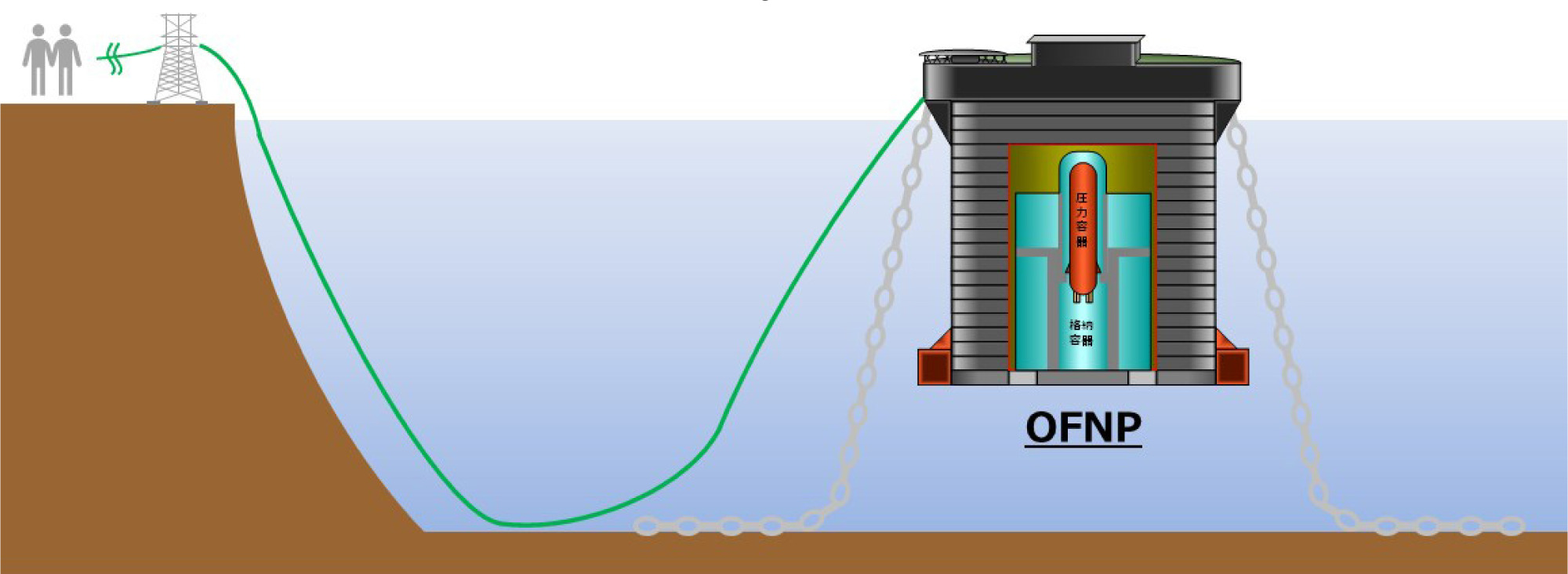
Even if the Japanese government has not ordered that certain actions be taken based on laws and regulations, such as a security dispatch, the SDF can, notwithstanding, conduct warning and surveillance activities across a wide range of waters near the OFNPs, with the JCG playing a support role. Consequently, nuclear attacks are expected to become less attractive, as proactive measures can be taken even in the absence of formal deployment orders. This addresses the vulnerability highlighted in Failure point 1.
In addition to the ability to conduct maritime security operations, using OFNPs provides procedural flexibility. Since these operations do not require prior approval from the Diet, the burden of gathering evidence is reduced. Furthermore, because the procedure for cabinet decisions has been expedited, the government can respond with greater agility. When allocating resources is difficult for the SDF, responding after an incident rather than before it can also serve as a viable tactic. This flexibility allows for an optimal crisis response based on national interests, directly addressing concerns noted in Failure point 3.
OFNPs also offer structural and technical advantages (Hara and Sagara, 2025a; 2025b). Critical safety equipment is installed below the waterline, and the entire structure is designed to withstand aircraft collisions, which increases resilience to threats such as bomb-equipped drones. Moreover, even in the event of complete “sinking,” the plant is designed to minimise the impact of radiation and enable salvage operations. These design features enhance impact mitigation and resilience, providing solutions to issues described in Failure point 4.
Together, these considerations demonstrate that OFNPs can compensate for operational limitations found in conventional NPPs. While Failure point 2 does not require modification, the other three failure points are substantially addressed through the design and deployment of OFNPs.
Summary of results for each research question
RQ 1: What types of grey-zone military threats to NPPs are most likely to involve high uncertainty and significant impact?
Scenario 1: Crisis of military attack on NPPs
In tense situations between nations, defending NPPs in emergencies has attracted worldwide attention, particularly following the highly effective attack on the Zaporizhzhia NPP. In Japan, crisis response to an impending military attack on NPPs has been a subject of regular discussion. This scenario is explored through two specific patterns. The first involves rising tension between Japan and Russia. The second considers growing tension in the region surrounding China and Taiwan, as discussed by Kroenig (2023). A scenario involving heightened tensions between South Korea and North Korea was also developed and examined; however, as its results were similar to those of the China and Taiwan scenario, we did not include it in this paper.
Scenario 2: Crisis of military attack on any target
Where tensions between nations are high, Japan considers every possible scenario, including grey-zone situations. Policymakers and stakeholders are engaged in ongoing discussions to determine the optimal crisis response that aligns with Japan’s national interests. In this context, two patterns of strategic scenarios were examined. The first involves tension between Japan and Russia. The second focuses on a situation involving heightened tension between China and Taiwan.
Scenario 3: Terrorist attack on NPPs
The effectiveness of the Zaporizhzhia NPP attack has drawn global attention to the potential for nuclear attacks during emergencies. In Japan, crisis response measures to address the possibility of a terrorist attack on an NPP are being discussed increasingly.
Scenario 4: Maintain the status quo
The world continues to engage in intermittent debates on terrorist and military attacks on NPPs. These discussions extend to the exercise of individual and collective self-defence rights.
RQ 2: What common countermeasures exist across multiple scenarios, and what are the implementation challenges for the Japanese government and plant operators?
The Japanese government should recognise that the SDF’s protection of NPPs in grey-zone situations should be implemented based not only on legal grounds but also on practical considerations. In addition, the approval procedure by the Diet for SDF’s logistics support activities during situations with significant impact should be revised from in principle ex ante approval to ex post facto approval or to a system that authorises the government to act without prior Diet consent. This change would enable more flexible and timely responses. Furthermore, Japan’s security legislation is currently based on a positive list system, which prescribes what the SDF is allowed to carry out. Shifting to a negative list system, which defines what the SDF must not do, would allow for a more agile response in a rapidly changing security environment.
However, several issues must be addressed when implementing these countermeasures. Dispatching the SDF could escalate the situation to the military level and provide the enemy country with a pretext for military operations. Nevertheless, since this case involves maintaining security within Japanese territory, rather than responding to external aggression, the probability of a full-scale military attack remains low. The appropriateness of institutional changes, such as shifting to ex post facto approval and adopting a negative list system, requires careful and thorough discussion. The critical outcome of scenario planning lies not only in the creation of deliverables, such as multiple scenarios and countermeasures, but also in the growth of the preparedness of participants and organisations. Therefore, enhancing readiness for multiple uncertain future scenarios is a key priority.
From the plant operator’s perspective, we propose several common countermeasures. These include the introduction of counter-drone technologies, such as high-power microwave irradiation devices, and the reinforcement of the exterior walls of spent fuel pool buildings. Physical isolation of these buildings is also recommended to further enhance protection.
To implement these measures continuously and without delay, aligning Japan’s security clearance system for sharing sensitive information with those of other countries is essential. Advancing international collaboration on counter-drone measures is likewise critical for ensuring effective protection.
RQ 3: What are the advantages and disadvantages of replacing land-based NPPs with OFNPs?
Even without the Japanese government ordering certain actions based on laws and regulations, such as a security dispatch, the JCG can still receive support at sea through the implementation of warning and surveillance activities over a wide range of waters near the OFNPs. As a result, the attractiveness of nuclear power attacks is expected to diminish.
In addition to the SDF being able to conduct maritime security operations, using OFNPs provides flexibility with respect to procedures. Since these operations do not require approval from the Diet, the administrative burden of gathering evidence is reduced. By expediting the procedure for cabinet decisions, the government can also enhance its responsiveness. In cases where the SDF faces difficulties in allocating resources in advance, adopting a strategy of responding after an incident rather than beforehand may also be effective. This approach supports an optimal crisis response aligned with Japan’s national interests.
Furthermore, because OFNPs are currently in the design stage, operators can directly incorporate protective measures against bomb-carrying drones as well as structural reinforcements for spent fuel pools into the design. These anticipatory design elements further enhance the resilience of OFNPs in future scenarios.
While no specific disadvantages have been identified to date, further scrutiny of economic feasibility is warranted. The FY2021 report by the COCN (2022) concluded that the construction costs of OFNPs are broadly comparable to those of land-based NPPs, based on preliminary estimates. However, the report also emphasised the need for a more detailed assessment of operational and maintenance costs, particularly considering the logistical challenges unique to offshore deployment.
Conclusions
This study explored various possible scenarios involving grey-zone military threats to NPPs in Japan, characterised by high uncertainty and potentially significant impacts. With regard to the Japanese government and plant operators, we identified the necessary countermeasures and challenges associated with mitigating such situations. In addition, we clarified the advantages and disadvantages of replacing the existing ground NPPs with OFNPs.
The results of the scenario planning highlighted the importance of allowing the SDF to operate not only within the legal framework but also in a practical manner that allows feasible operations of safeguarding NPPs during grey-zone situations. Furthermore, this study discussed the need to shift parliamentary approval for rear-area support activities under critical-impact situations from prior- to post-event approval. It also emphasised the significance of changing defence-related laws from a positive list approach to a negative list approach. In addition, the necessity of countermeasures against bomb-equipped drones, such as high-power microwave irradiation systems, was underscored.
An advantage of replacing ground NPPs with OFNPs is that even during peacetime—when the SDF is not ordered to act according to the law—the SDF can conduct wide-area warning and surveillance activities over offshore regions, thereby deterring adversaries. Additionally, because maritime security operations, which do not require parliamentary approval or streamlined cabinet decision procedures, can be ordered, excessive evidence collection for parliamentary approval is not necessary. If allocating SDF resources becomes difficult, responses can be incorporated into tactics after incidents occur. Finally, the results emphasise the uniquely enhanced technical robustness of OFNPs against drone attacks and other threats.
Although the findings of this study are based on a scenario involving Japan, they may also offer insights for countries that prioritise territorial defence and national autonomy, such as Sweden and Finland, which have historically pursued defence-oriented security policies. The proposed countermeasures, including the use of OFNPs, could be adapted to other national contexts with similar strategic principles.